
Milton Keynes leads the way on autonomous shuttles and robotics
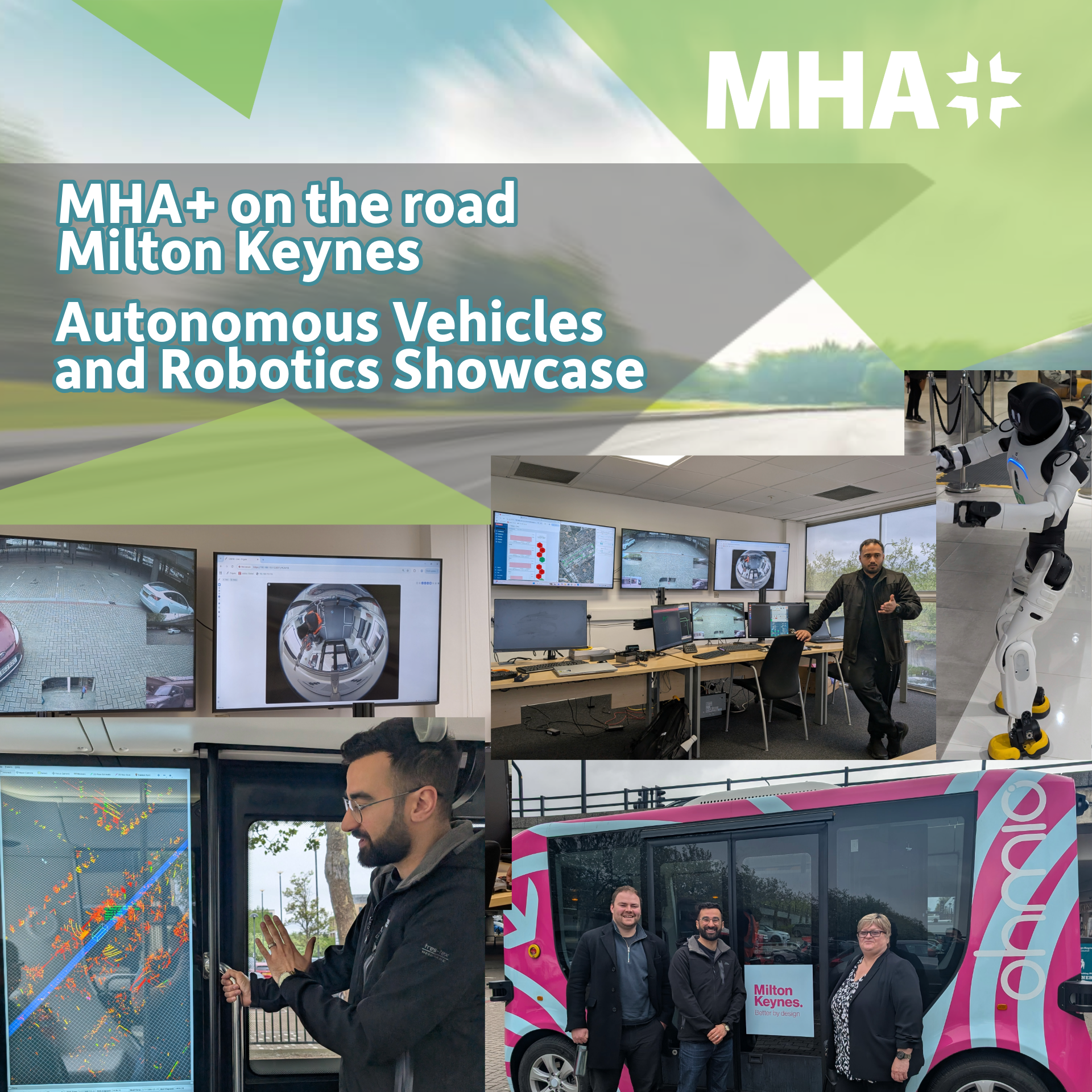 Milton Keynes has long been at the forefront of transport innovation. A recent demonstration by MHA+ member Milton Keynes Council and Smart City Consultancy with robotics firm Ohmio showcased the latest developments in autonomous shuttle technology alongside a range of robotic solutions designed to improve city transport.
A new way to travel
The centrepiece of the visit was a ride from CentreMK to the train station and back, in an autonomous shuttle designed for “first and last mile” journeys – bridging the gap between people’s homes, shopping and entertainment centres, and essential transport hubs.
Operating at Level 4 autonomy, the shuttle follows a dedicated pre-mapped route using laser-based sensors (LIDAR) and six cameras to navigate. “Level 4 autonomy means that we follow that dedicated track – we won’t come out of that track unless we have to do overtake,” explained Baran Sahan, Head of Operations at Smart City Consultancy. A safety driver is currently on board, but the ambition is clear: “We’re hoping to get another round of funding to do one year focused on doing no one on board and just let the shuttle buzz around – give it that day-to-day exposure before it’s actually on with other road users.”
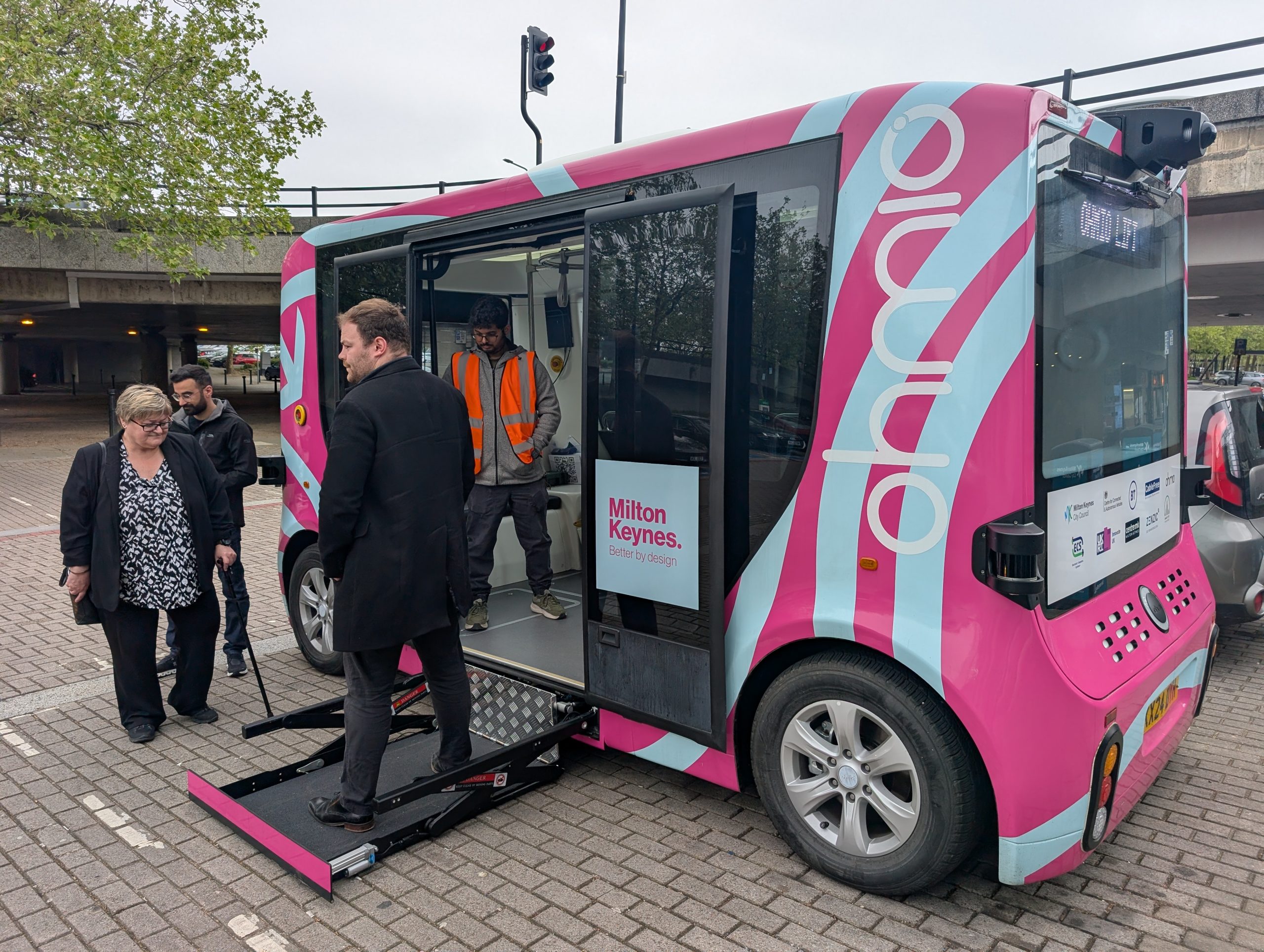 The bar for the passenger experience is set high. “I want it to be better than a bus,” said Joe Mundy, transport lead for Milton Keynes Council. “It needs to be as convenient as a private car but as smooth as a tram.”
Practical advantages over conventional minibuses were also highlighted. “It fits in a standard bus bay,” Joe noted. “A minibus with 18 seats would need a larger bus bay just for the manoeuvring.”
Ohmio UK is a partner in the government-funded StreetCAV project, which received £1.8 million through the Centre for Connected and Autonomous Vehicles programme to deploy a self-driving shuttle service in Milton Keynes as a blueprint for UK-wide rollout.
Innovation in the control room
The demonstration included a visit to a high-tech control centre, where engineers showed how vehicles can be monitored remotely using 5G connectivity.
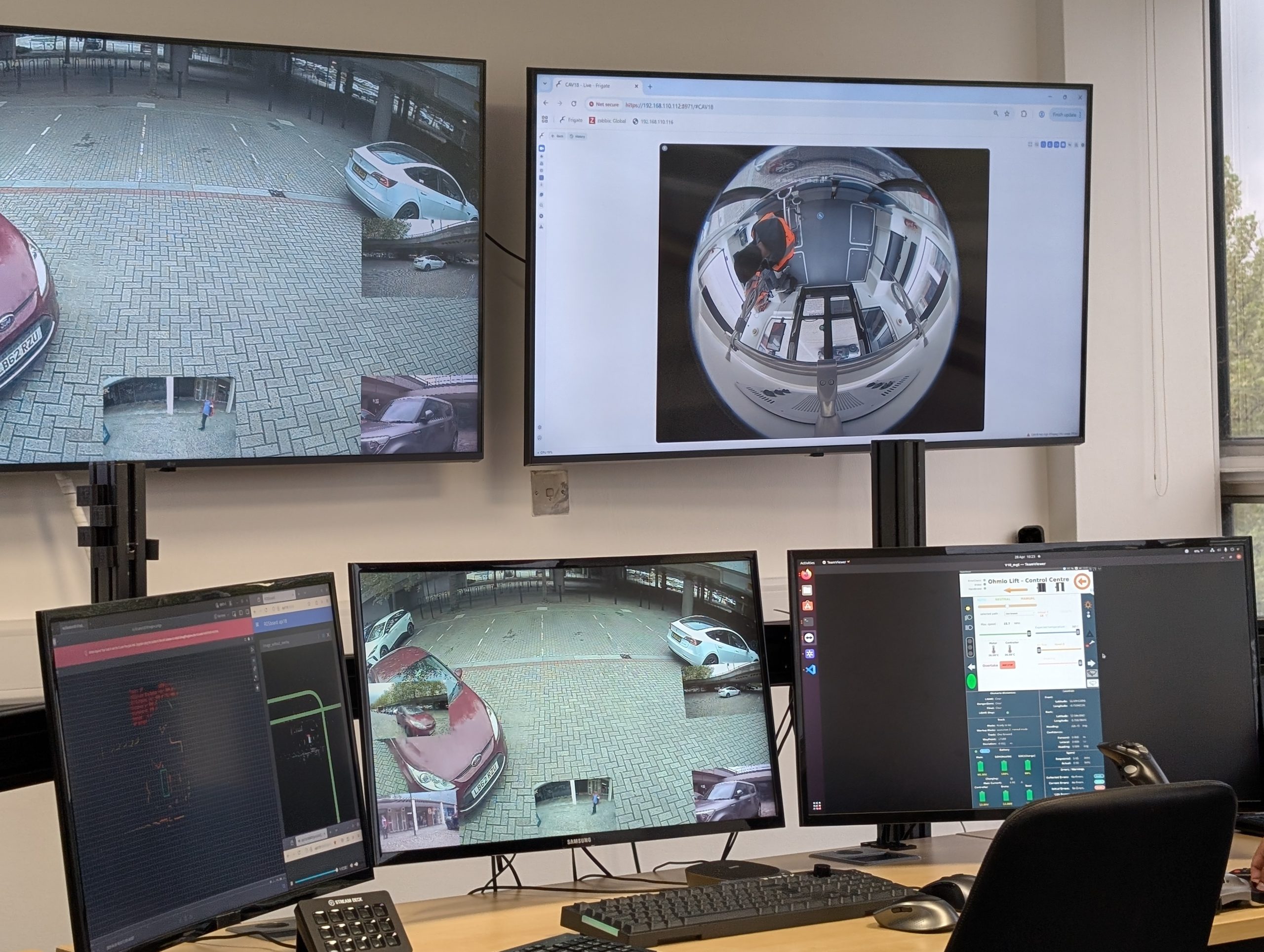
The philosophy behind the system is one of minimal human intervention. “The joystick manual control is probably the last thing we want to do – we wouldn’t want to use it unless we have to,” Baran explained. Instead, the approach is what the team calls “assisted autonomy”: “We want to get to a position where it’s more around remote assistance rather than tele-operation. The operator will just look, make a decision, press a button, and all of the rest of the task would be handled by the autonomous shuttle itself.”
The LIDAR system plays a key safety role throughout. “The LIDAR does scream back at me – it makes a noise if I’m getting too close to an object,” an engineer in the control room noted.
More than just shuttles
The event also highlighted Milton Keynes as a growing hub for robotics more broadly. Several other solutions were on display, including:
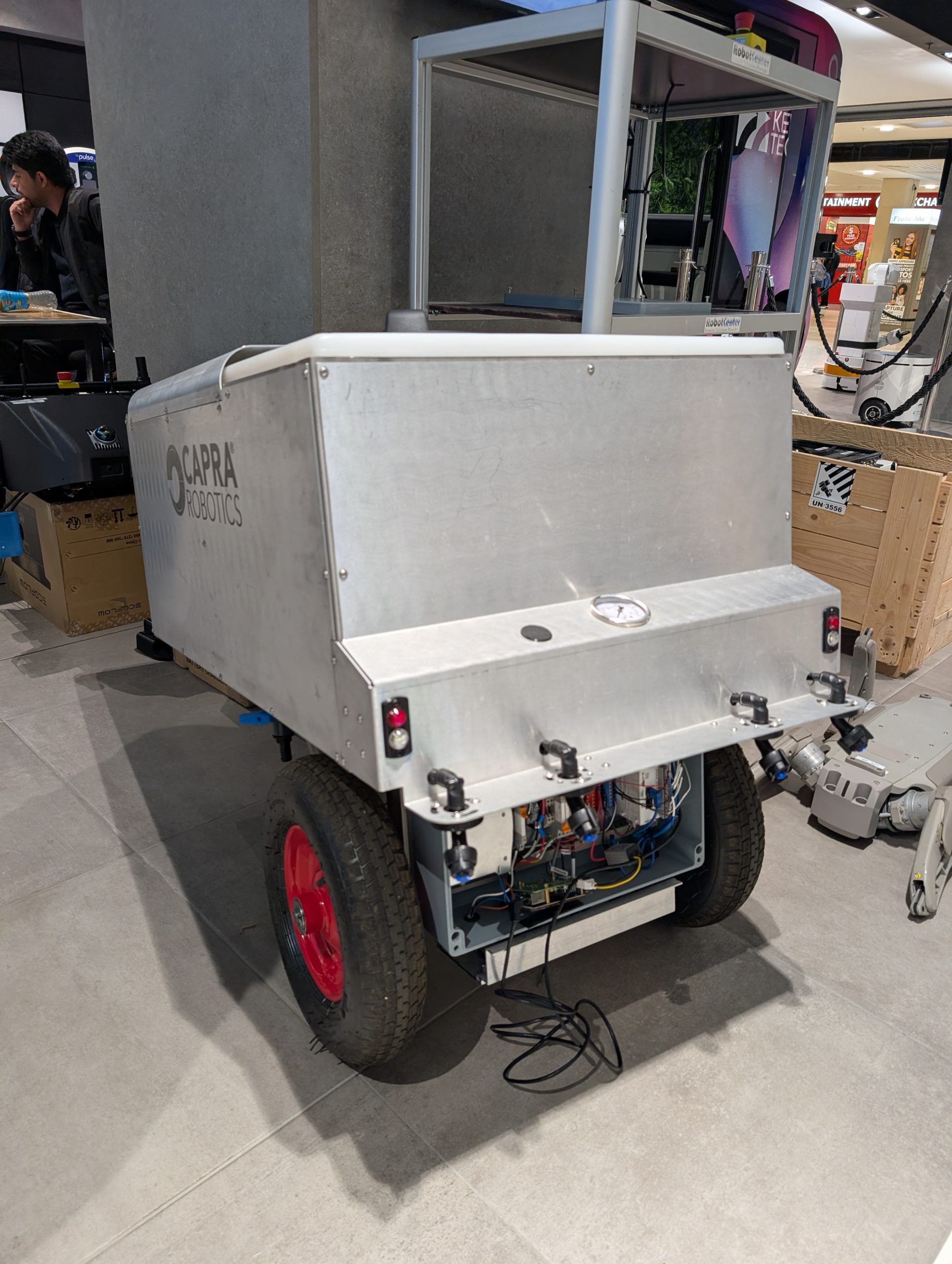
 Maintenance robots: specialised modular machines for de-icing pavements, removing weeds without chemicals, and cleaning chewing gum and cigarette butts from streets. Milton Keynes Council recently received £781,817 through the government’s Regulatory Innovation Office to pilot exactly these kinds of pavement robots.
- Healthcare assistants: companion robots designed for care homes, able to detect falls and monitor whether residents are staying hydrated.
- Delivery robots: autonomous units currently being used to deliver medicines within hospitals and trialled in Milton Keynes University Hospital.
The broader vision is one of a joined-up urban ecosystem. “If you build the ecosystem, you just take out a component, put in a new one,” Baran explained. “You’ve just got to build up standards of what each component does.”
The legal landscape
The timing of the demonstration is significant. On 23 April 2026, the government laid the Automated Vehicles (Permits for Automated Passenger Services) Regulations 2026 in Parliament, establishing a dedicated route for passenger-carrying automated services to operate on public roads. This gives businesses the regulatory confidence to invest in and deploy services of the kind being trialled in Milton Keynes.
Joe acknowledged that navigating the regulatory environment requires careful positioning. “Having it ‘bus-like’ give us flexibility. It’s not public transport, so existing regulations do not apply, and it’s not taxi services, so those regulations don’t apply either. However, to not upset anyone, we need to follow existing regulations as best as possible.”
The underlying ambition, however, is straightforward: “We are looking at this helping get people onto public transport – buses and trains. I’m not interested in trying to replace big buses or move 50 people.”
The city has been a testbed for autonomous vehicle technology since 2015, when it was one of four locations chosen for the UK’s first public road trials of driverless vehicles.
Looking ahead
Improvements to battery technology mean the next generation of shuttles should be capable of running all day on a single charge. “The new batteries, even though they’re double the capacity, aren’t much heavier or bigger. We should be able to do 150 miles or so, which from our experience is more than a day of running,” said Baran.
The vision for how people will access the service is also taking shape. “The idea is that the stops would be treated like bus bays, with a pre-booked app making the service more flexible than fixed routes,” said Joe Mundy.